I inherited a complex dispute-management platform after the previous technical lead left the project. The product had a lot of moving parts: configurable templates, custom fields, nested content structures, reporting, dashboards, document and PDF generation, workflow logic, and detailed business rules.
When I joined, the project was in rough shape. The team was disjointed, the direction was unclear, development stories were messy, the technical approach was not well-suited to the project, and parts of the system depended on custom extensions tied to deprecated codebases.
This was not a situation where “just write more code” would fix the problem. I needed to understand what was actually happening before I could help the team move forward.
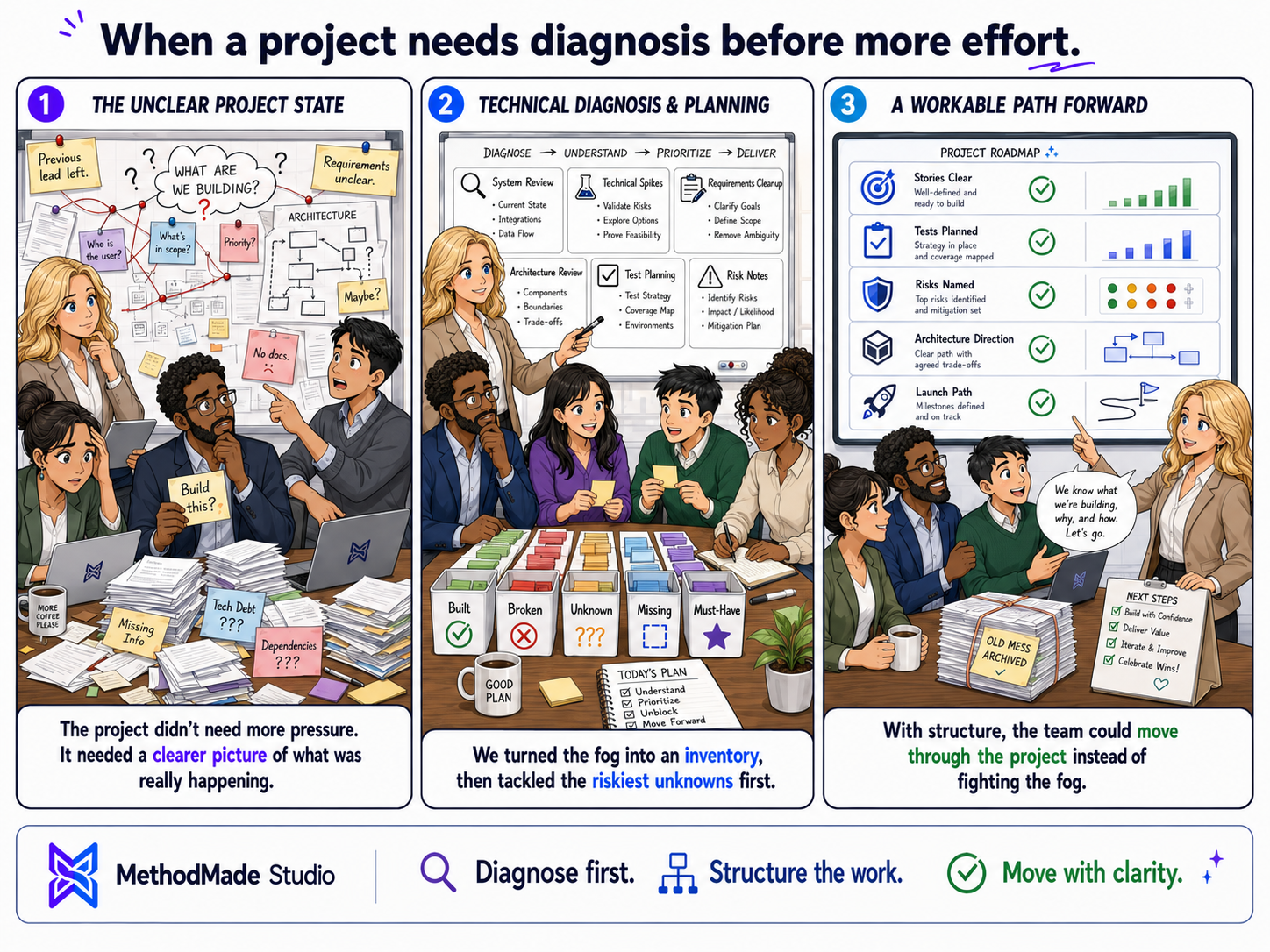
I started by slowing the chaos down enough to map it. I performed a technical audit, reviewed the codebase, mapped the architecture, cleaned up tickets and stories, talked with stakeholders, ran technical spikes, and held one-on-one conversations with the team. I needed to understand what was broken technically, what was unclear from a product standpoint, where the dependencies were risky, and where the team had lost confidence.
From there, I helped correct the technical direction. I replaced and refactored risky custom extensions, reduced dependency issues, adjusted the architecture approach, improved story structure, added a testing plan, broke the work into safer phases, and created clearer patterns for templates, custom fields, document generation, and workflow logic.
Just as important, I worked on the team environment around the project. A messy system can make good engineers feel ineffective. I focused on creating clearer expectations, better planning, calmer communication, and a path the team could actually move through.
I also onboarded a new developer who started the same day I joined the project. As the project stabilized, she became one of the strongest developers on the team.
With the technical direction clarified and the work reorganized, the scoped product work reached production in less than six months from the reset. The team had a clearer architecture, safer phases, stronger testing, more usable workflow patterns, and greater confidence in the path forward than at the start of the rescue effort.
This project is a good example of why struggling software projects need diagnosis before acceleration. Moving faster does not help if the team is moving in the wrong direction, building on fragile dependencies, or working from unclear requirements. The useful work starts with understanding the system, the people, the risks, and the real path to launch.