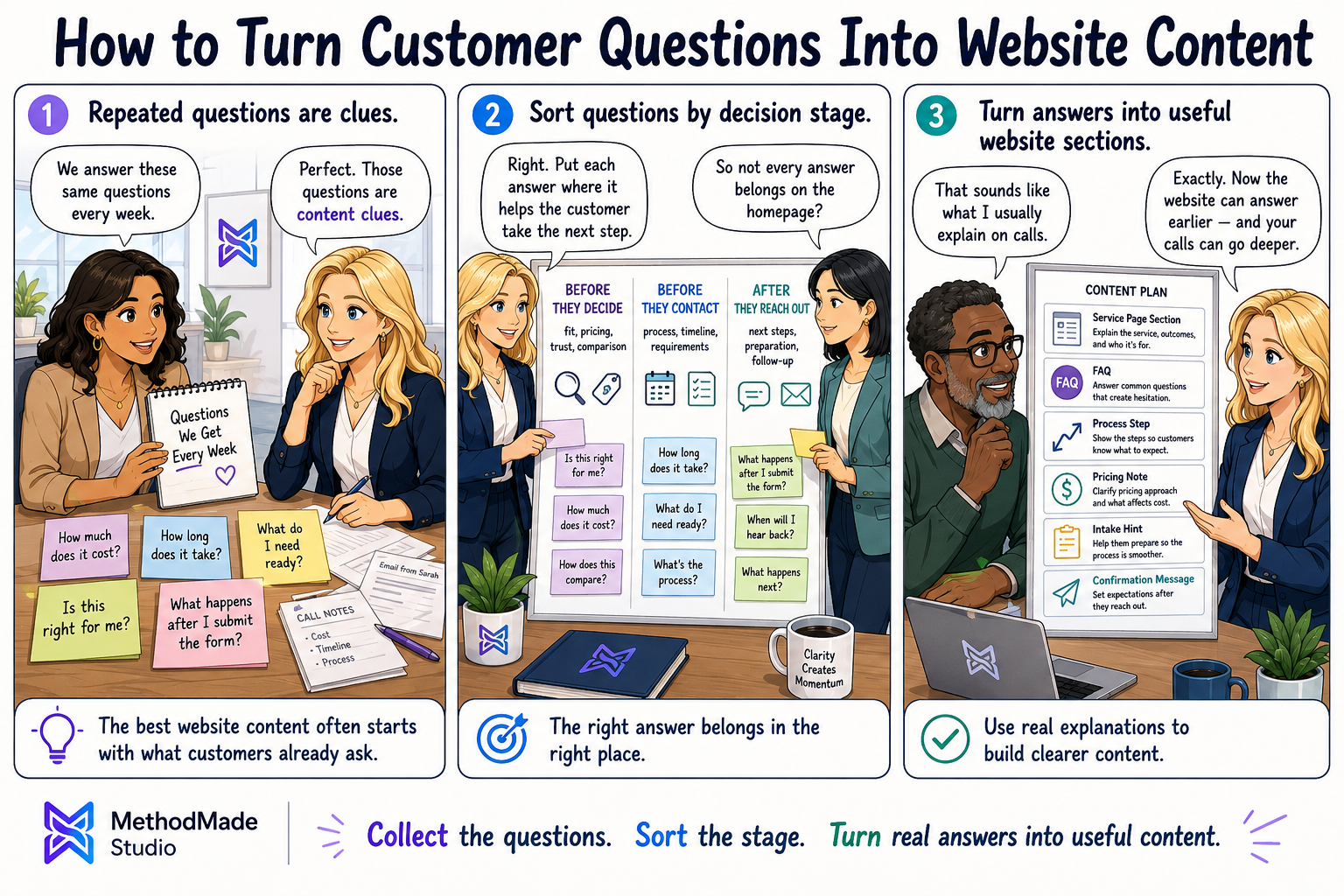
The best website content often does not start in a brainstorming session. It starts in the questions customers already ask. Those questions reveal what people do not understand yet, what they worry about, what they compare, and what they need to believe before they take the next step.
Listen for repeated questions
A repeated question is a clue. It may mean the website is missing a service explanation, process note, pricing expectation, timeline, requirement, trust signal, or contact instruction.
The goal is not to answer every possible question on the homepage. The goal is to put the right answers in the right places so customers feel less lost before they reach out.
- ✓What do people ask before they hire you?
- ✓What do they ask after they submit a form?
- ✓What do they misunderstand about your services?
- ✓What makes them hesitate?
- ✓What do they need to have ready?
Sort questions by decision stage
Some questions belong early because they help someone decide whether the business is a fit. Others belong later because they are details for onboarding, scheduling, preparation, or follow-up.
Sorting questions by decision stage prevents the website from becoming one giant wall of information. It also helps the business decide whether an answer belongs on the homepage, service page, FAQ, contact form, confirmation message, or follow-up email.
Turn answers into useful sections
A customer question can become more than an FAQ. It can become a service-page section, a process explanation, a pricing note, a comparison guide, an intake hint, a confirmation message, or a trust-building proof point.
The strongest answers are specific, plain-language, and honest. They help the right people move forward and help the wrong-fit people self-select out before creating extra work.
Use the team’s repeated explanations
Ask the people who answer phones, reply to emails, write estimates, schedule work, or handle support what they explain most often. Their answers are content gold because they come from real customer conversations.
When those explanations move onto the website, the team spends less time repeating basics and more time helping customers with specific needs.